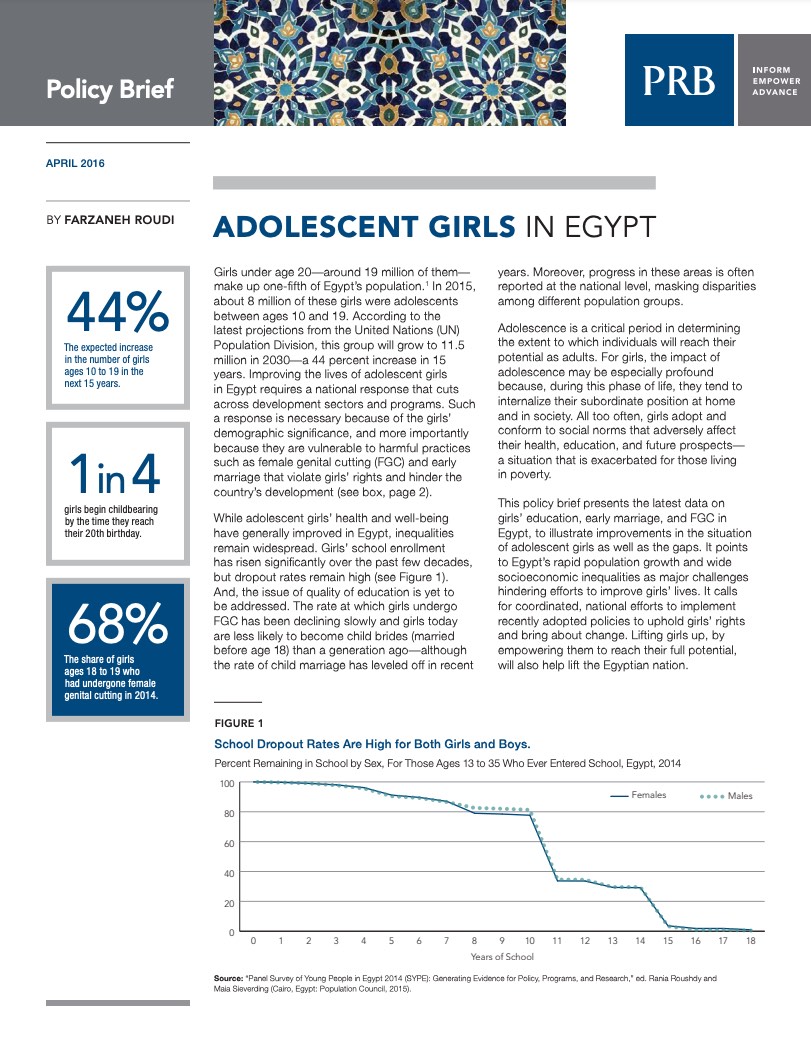
Adolescent Girls in Egypt
(2016) In Egypt, harmful practices that violate girl's rights are hindering the country's development and ignoring the demographic significance of adolescent girls in the country.
View Details
Array
(
[ID] => 15476
[id] => 15476
[title] => prb-policy-brief-mena-adolescent-girls-in-egypt-2016
[filename] => prb-policy-brief-mena-adolescent-girls-in-egypt-2016.pdf
[filesize] => 380654
[url] => https://www.prb.org/wp-content/uploads/2016/04/prb-policy-brief-mena-adolescent-girls-in-egypt-2016.pdf
[link] => https://www.prb.org/resources/adolescent-girls-in-egypt/prb-policy-brief-mena-adolescent-girls-in-egypt-2016/
[alt] =>
[author] => 15
[description] =>
[caption] =>
[name] => prb-policy-brief-mena-adolescent-girls-in-egypt-2016
[status] => inherit
[uploaded_to] => 15473
[date] => 2021-02-01 02:58:16
[modified] => 2021-02-01 02:58:16
[menu_order] => 0
[mime_type] => application/pdf
[type] => application
[subtype] => pdf
[icon] => https://www.prb.org/wp-includes/images/media/document.png
)
Download
(0.4 MB)