(2009) Latinos make up a growing share of young Americans: Nationally their share reached 22 percent in 2008, but it already approaches or exceeds 50 percent in several states, including Arizona, California, New Mexico, and Texas.
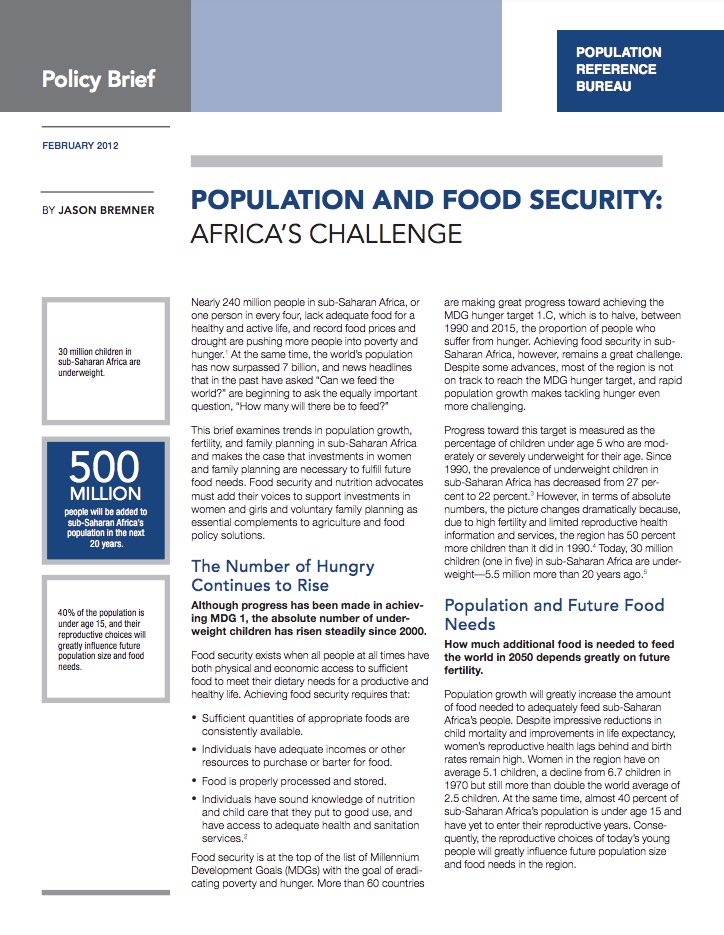
Population and Food Security: Africa’s Challenge (Part 2)
(2012) Almost two of every three people in sub-Saharan Africa live in a rural area, relying principally on small-scale agriculture for their livelihood. Improving agriculture on small farms is critical to reducing hunger.
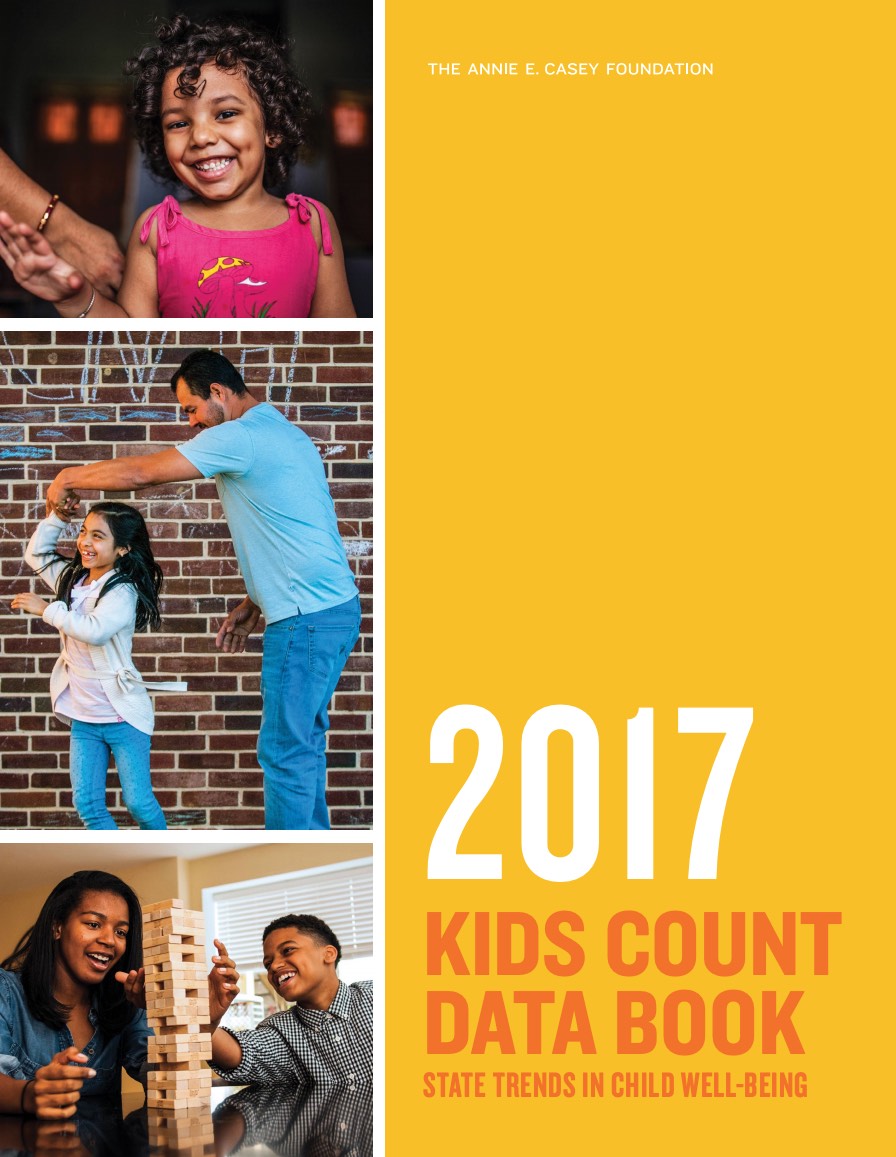
Report. 2017 KIDS COUNT Data Book: How Are Children Faring?
(2017) The KIDS COUNT Data Book—now in its 28th year—provides an up-to-date and detailed picture of how children are faring in the United States, nationally and in each state.
View Details
Array
(
[ID] => 6167
[id] => 6167
[title] => 2017-Kids-count-KCDB_FINAL
[filename] => 2017-Kids-count-KCDB_FINAL.pdf
[filesize] => 12427012
[url] => https://www.prb.org/wp-content/uploads/2020/12/2017-Kids-count-KCDB_FINAL.pdf
[link] => https://www.prb.org/resources/2017-kids-count-data-book/2017-kids-count-kcdb_final/
[alt] =>
[author] => 15
[description] =>
[caption] => The Annie E. Casey Foundation released the 2017 KIDS COUNT Data Book on June 13, 2017. The KIDS COUNT Data Book—now in its 28th year—provides an up-to-date and detailed picture of how children are faring in the United States, nationally and in each state. The KIDS COUNT Data Book features a comprehensive index of child well-being and includes a national profile and state-level rankings across four content domains: (1) Economic Well-Being, (2) Education, (3) Health, and (4) Family and Community. The 2017 Data Book reveals many bright spots for children and family well-being during the economic recovery following the Great Recession, yet room for improvement remains in many areas.
[name] => 2017-kids-count-kcdb_final
[status] => inherit
[uploaded_to] => 6166
[date] => 2020-12-02 22:20:18
[modified] => 2020-12-02 22:20:29
[menu_order] => 0
[mime_type] => application/pdf
[type] => application
[subtype] => pdf
[icon] => https://www.prb.org/wp-includes/images/media/document.png
)
Download
(12.1 MB)
At the fractious Constitutional Convention in Philadelphia in 1787, America's founders conceived the idea of a national census to determine the number of representatives each state would send to Congress.
(2020) The U.S. population is undergoing rapid racial and ethnic change, led by growth of the Hispanic/Latino and Asian American populations. For policymakers and others, keeping track of these changes is important because some racial and ethnic groups are faring worse than others.
(2014) U.S. children of incarcerated parents are an extremely vulnerable group, and much more likely to have behavioral problems and physical and mental health conditions than their peers, reports Kristin Turney, a University of California-Irvine sociologist.
(2011) Despite the recent attention to ending early marriage around the world, married adolescents remain invisible to many policymakers and program developers.
This guide explains what’s behind falling fertility rates, unpacks common assumptions about fertility decline, and explores how policymakers can respond.