Project: Empowering Evidence-Driven Advocacy
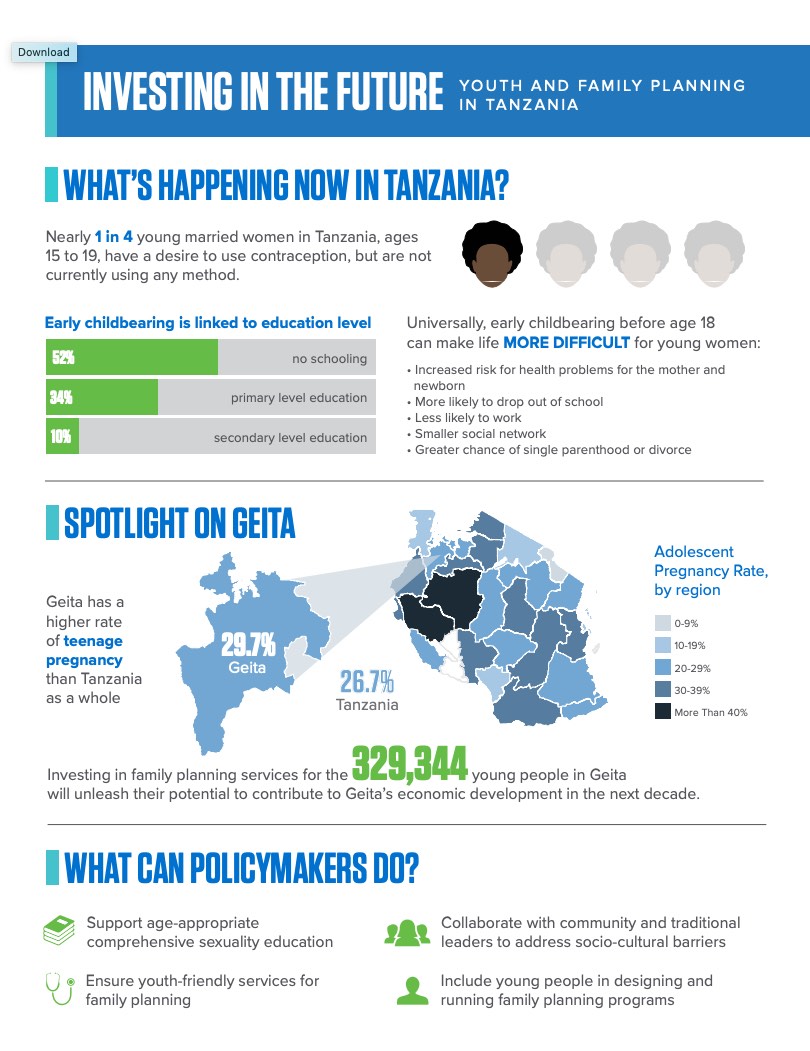
Infographic. Spotlight on Geita
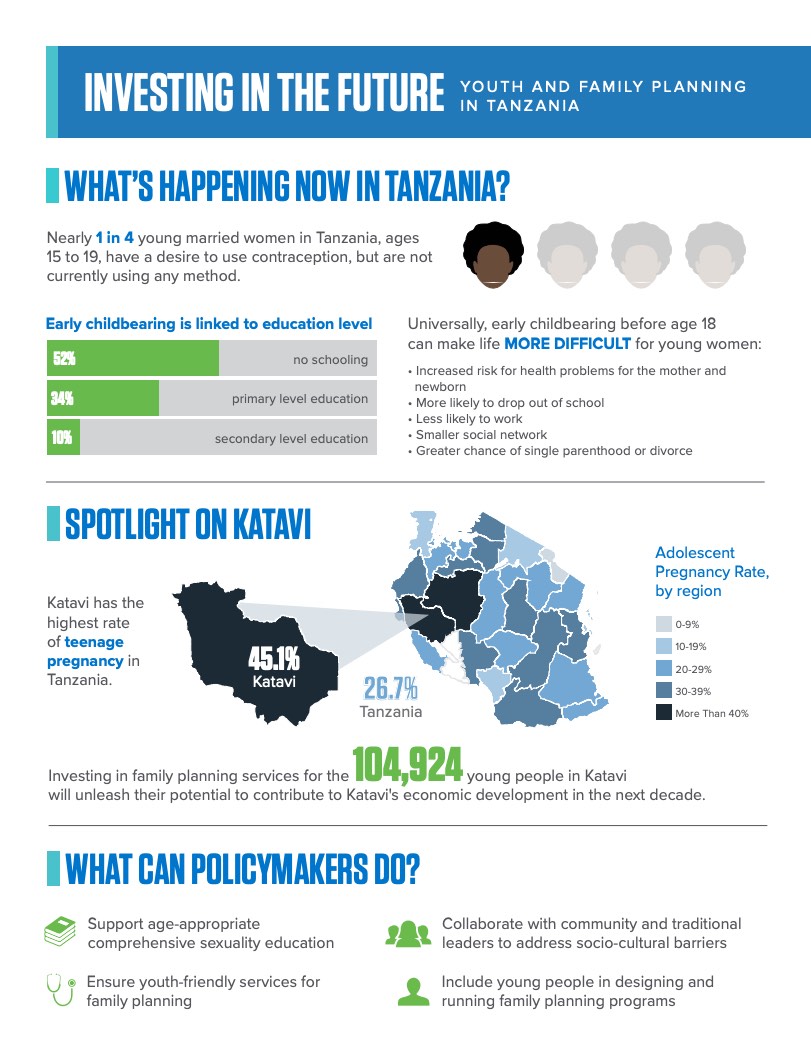
Nearly 1 in 4 young married women in Tanzania, ages 15 to 19, have a desire to use contraception, but are not currently using any method.
Project: Empowering Evidence-Driven Advocacy
Nearly 1 in 4 young married women in Tanzania, ages 15 to 19, have a desire to use contraception, but are not currently using any method.
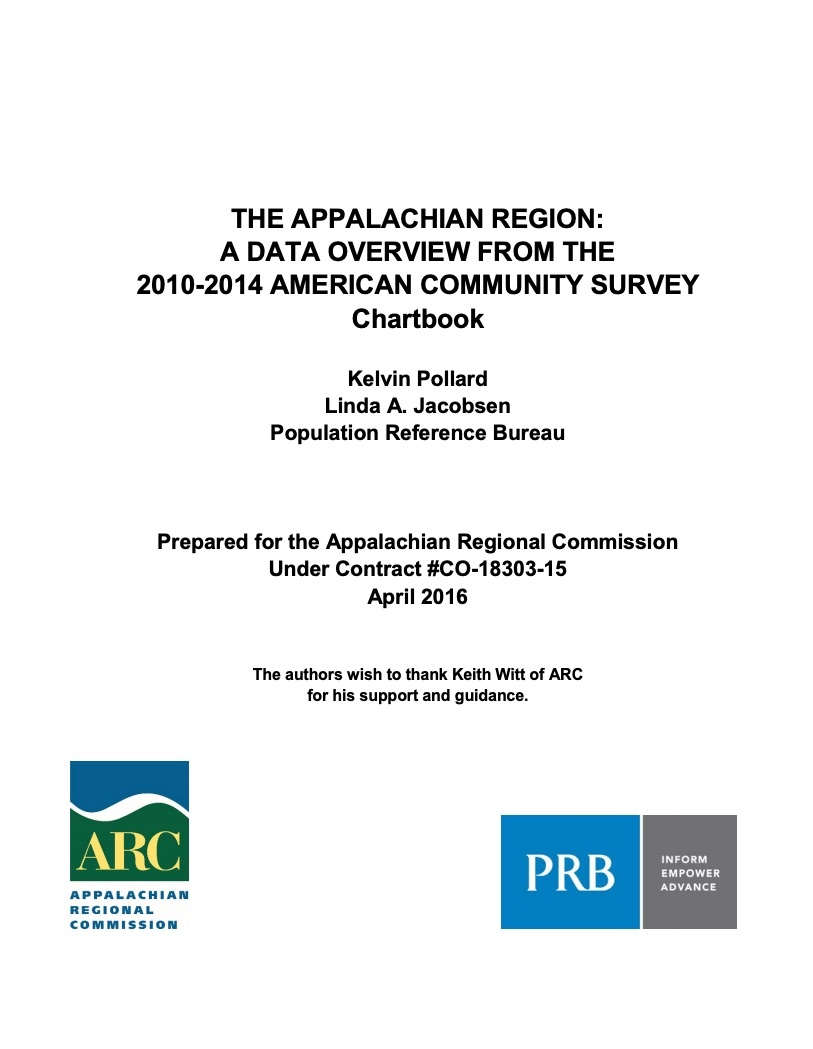
Project: Appalachia: Demographic and Socioeconomic Trends
(2015) Appalachia's residents in their prime working years are less likely to be in the labor force or to hold college degrees than the U.S. population as a whole, but these and other demographic, health, and socioeconomic patterns vary widely within the region.
Middle East and North Africa (MENA) program, initiated in 2001 with funding from the Ford Foundation, responds to the region's need for timely and objective information on population, socioeconomic, and reproductive health issues.
Project: Empowering Evidence-Driven Advocacy
Katavi has the highest rate of teenage pregnancy in Tanzania.
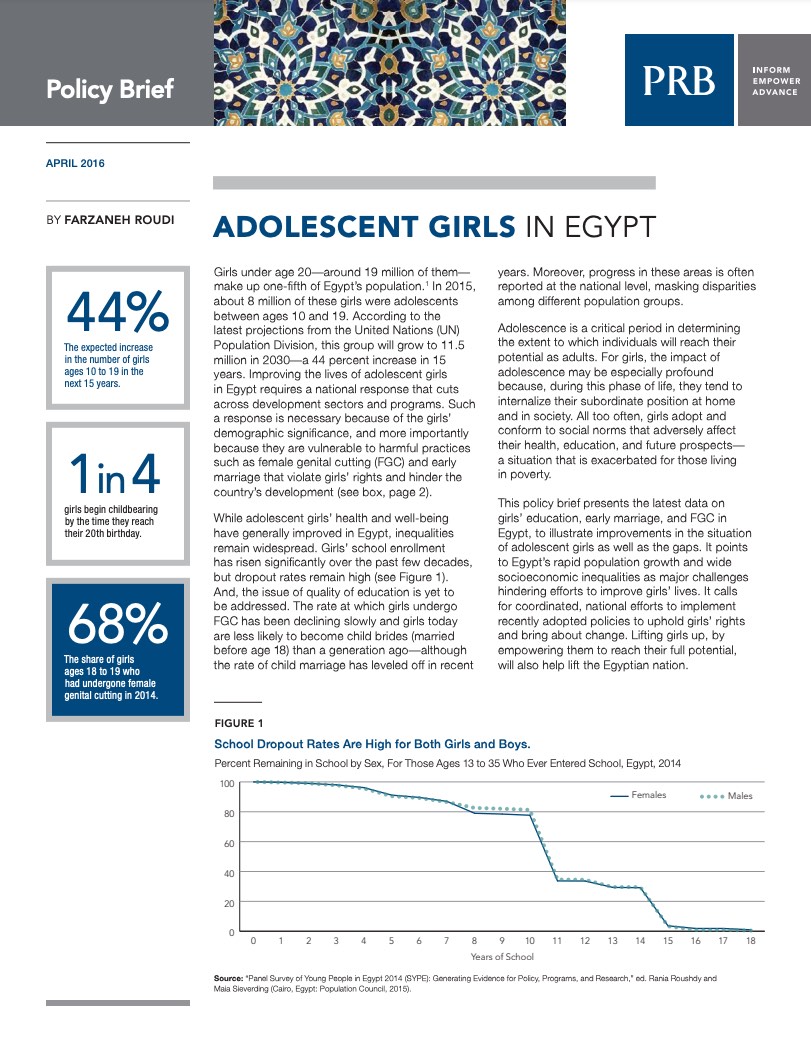
(2016) In Egypt, harmful practices that violate girl's rights are hindering the country's development and ignoring the demographic significance of adolescent girls in the country.
(2012) The slow recovery from the recession has fallen hard on America's working poor families, increasing their numbers by 125,000 in 2010 to more than 10 million families, according to a new analysis of U.S. Census Bureau data.
Project: Empowering Evidence-Driven Advocacy
Simiyu has a higher rate of teenage pregnancy than Tanzania as a whole
Ensuring that family planning, reproductive health, and population issues are key for sustainable and equitable economic growth and development.
(2008) Immigration and higher fertility among minorities have put the United States on a path to become "majority-minority," when less than 50 percent of the population will be non-Hispanic white.