(2009) Although child poverty conjures up an urban image for most Americans, one-fifth of children in poverty live in rural areas. Poverty rates are higher for rural than for urban children, and the gap has increased in recent years.
(2010) Disability in older Americans affects the entire population of the United States because of its impact on the level of health care spending, especially spending on long-term care.
(2010) The State of Metropolitan America, by the Brookings Institution's Metropolitan Policy Program, identifies five demographic trends and developments that dominated the first decade of the 2000s in the 100 largest metro areas of the United States.
(2007) We entered the 20th century with a population of 1.6 billion people. We entered the 21st century with 6.1 billion people. And in 2007, world population is 6.6 billion.
(2000) Latvia, Estonia, and Lithuania are in the midst of a transition to independence after nearly 50 years of domination by the Soviet Union. Some of the first laws passed by the newly independent governments placed strict limits on who could become a citizen and actively promoted use of the native languages.
A PRB analysis finds that workers in one of the hardest-hit sectors—food preparation and server-related occupations—are among the most economically vulnerable.
(2008) The U.S. population is set to reach 400 million by 2039, four years earlier than previously projected, according to new population projections from the U.S. Census Bureau.
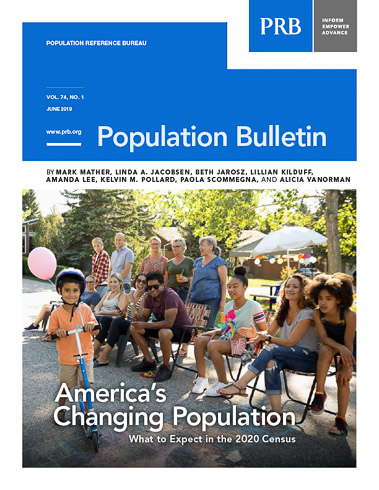
Population Bulletin, Vol. 74, No. 1: America’s Changing Population
Population Bulletin 74, No. 1 This Bulletin provides a preview of 2020 Census results—identified through data from surveys, population estimates, and projections—and an overview of key population and housing trends.
View Details
Array
(
[ID] => 3634
[id] => 3634
[title] => 2019-74-1-Population-Bulletin-Census
[filename] => 2019-74-1-Pop-Bulletin-Census.pdf
[filesize] => 3536201
[url] => https://www.prb.org/wp-content/uploads/2020/10/2019-74-1-Pop-Bulletin-Census.pdf
[link] => https://www.prb.org/resources/population-bulletin-vol-74-no-1-americas-changing-population/2019-74-1-pop-bulletin-census/
[alt] =>
[author] => 15
[description] => VOL. 74, NO. 1 JUNE 2019 - Population Bulletin -America’s Changing Population, What to Expect in the 2020 Census April 1, 2020 is Census Day. The U.S. Constitution mandates that a census be taken every 10 years to count all people—both citizens and noncitizens—living in the United States.1 An accurate count of the population is both required by law and serves as the basis for fair political representation, and it plays a vital role in many areas of public life.
[caption] =>
[name] => 2019-74-1-pop-bulletin-census
[status] => inherit
[uploaded_to] => 7807
[date] => 2020-10-27 17:11:40
[modified] => 2021-05-11 17:19:22
[menu_order] => 0
[mime_type] => application/pdf
[type] => application
[subtype] => pdf
[icon] => https://www.prb.org/wp-includes/images/media/document.png
)
Download
(3.5 MB)